

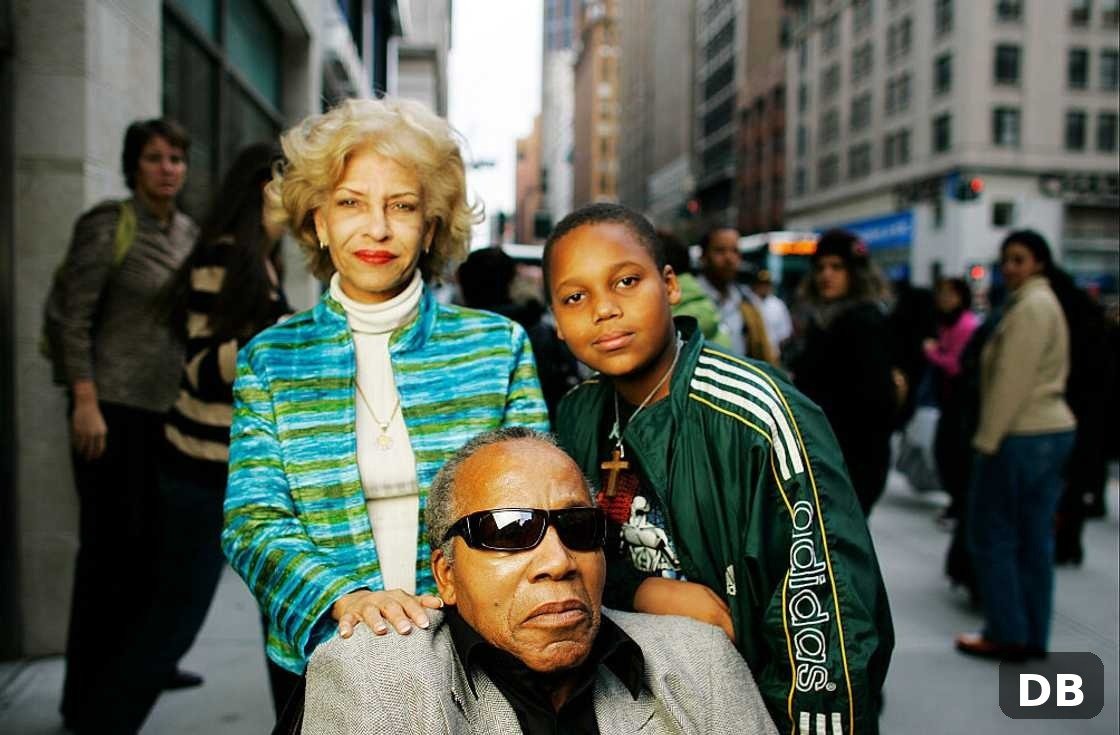
If you watched Ridley Scott’s American Gangster, you remember her — the glamorous wife at Denzel Washington’s side, the woman the film calls Eva, supposedly a former Miss Puerto Rico. What the movie does not tell you is that the real woman was named Julie Farrait — or Julianna Farrait, depending on the source — and her life was stranger, darker, and far less glamorous than the screenplay. But there is much more to the story than one film scene.
Julie Farrait was the longtime wife of Frank Lucas, the Harlem heroin kingpin whose empire dominated the late 1960s and early 1970s. She lived the luxury, did the prison time, watched the marriage fracture and mend, and then — remarkably — ended up back in a courtroom decades later on drug charges of her own. No, she was not Miss Puerto Rico. Yes, she really went to prison. And almost everything else people repeat about her needs a closer look.
This article reconstructs what can actually be documented about Frank Lucas’s wife: her Puerto Rican roots, the 1967 marriage, her documented role in the drug operation, the prison sentences, the separation and reconciliation, and where the movie invented and the truth lived. If you only know the character Eva, you are about to meet the woman.
Quick Bio
| Full Name | Julie Farrait (also reported as Julianna Farrait / Julianna Farrait-Rodríguez) |
| Known For | Wife of Harlem drug kingpin Frank Lucas; inspired the character Eva in American Gangster |
| Birth Year | Around 1940–1941 (reported; never confirmed by a primary source) |
| Birthplace | Puerto Rico |
| Nationality | Puerto Rican-American |
| Profession | No widely documented independent career |
| Spouse | Frank Lucas (married 1967; widowed on his death in May 2019) |
| Children | Frank Lucas had seven children in total; Francine Lucas-Sinclair is the daughter most publicly associated with the family |
| Legal History | Served five years in prison for involvement in Lucas’s drug enterprise; arrested again in Puerto Rico in 2010 and sentenced to five years |
| Current Status | Has never been made public in detail; believed to live privately |
Who Is Julie Farrait?
Julie Farrait was the wife of Frank Lucas, the North Carolina-born trafficker who built one of the most notorious heroin networks in American history — the so-called “Country Boys” operation that imported heroin from Southeast Asia in the late 1960s and early 1970s. Biography.com identifies her as Julianna Farrait and describes her as a former Puerto Rican homecoming queen who became involved in her husband’s criminal enterprise and served five years in prison.
That last fact is what separates her from the standard “gangster’s moll” archetype. Julie was not merely adjacent to the crime; she participated in it, was prosecuted for it, and did time for it — twice, decades apart. The movie version of her life is a supporting role. The real version is a case study in how a marriage to a criminal became a criminal record of its own.
One note on the name before we go further: sources variously call her Julie Farrait, Julianna Farrait, and Julianna Farrait-Rodríguez. The short form dominates the popular press. We will use Julie throughout.
Early Life in Puerto Rico
Much of Julie Farrait’s childhood sits outside the public record — her parents, her schooling, and her early family life have never been reliably documented. What the sources agree on is the starting point: she was born in Puerto Rico around 1940 or 1941 and spent her early years on the island before moving to the United States as a young adult, part of the large wave of Puerto Rican migration to the mainland in that era.
Biography.com describes her as a former homecoming queen in Puerto Rico — a detail worth holding onto, because it is the seed of one of the biggest myths about her. She was not, as some claim, Miss Puerto Rico. She was, by the credible accounts, a locally celebrated beauty who lived a modest life until she crossed paths with a man whose ambitions would detonate her world.
How Julie Met Frank Lucas
Accounts of the first meeting vary in the particulars but agree on the shape of it: Julie and Frank Lucas met in the 1960s, with several sources connecting the meeting to Puerto Rico and Lucas’s frequent travel between the island and New York. What began as a romance developed into a serious relationship, and the couple married in 1967, according to multiple biographical accounts.
The timing matters. In 1967 Lucas was expanding the operation that would make him infamous — cutting out the middlemen and importing heroin directly. Julie did not marry into a quiet domestic life. She married into an enterprise at the exact moment it was scaling into something historic, and her life from that point forward ran on two tracks at once: extraordinary wealth and gathering legal danger.
Life at the Height of the Harlem Empire
Being Frank Lucas’s wife in the late 1960s and early 1970s meant living inside the mythology as it was being written. The couple’s lifestyle — designer clothes, jewelry, travel, conspicuous luxury in the middle of Harlem — became part of the legend. Julie’s elegance and fashion sense were widely noted; she was, in the accounts of the era, every inch the kingpin’s wife.
The most famous artifact of that lifestyle is a coat. Julie bought Frank an extravagant chinchilla coat and hat — reportedly worth around $125,000 — which he wore to the 1971 Muhammad Ali–Joe Frazier fight at Madison Square Garden. The garment made him instantly recognizable to the law enforcement officers in the building, and the story has been retold for decades as the moment flashiness blew the operation’s cover. Whether the coat single-handedly doomed Lucas is debated, but its symbolism is undisputed: it captured how the couple’s visibility became the enterprise’s vulnerability.
For readers drawn to the families behind famous names, our Celebrity section covers more stories where private lives collided with public legend.
Prison, Separation, and Reconciliation
The empire fell in the mid-1970s. Lucas was arrested in a 1975 raid, convicted, and eventually sentenced to decades in federal prison — though he later cooperated with authorities and had his sentence sharply reduced. Julie’s own reckoning came separately: Biography.com reports that she was convicted for her involvement in the drug enterprise and served five years in prison.
Prison changed the marriage. After her release, the couple lived apart for years — Julie reportedly returned to Puerto Rico while Frank rebuilt his life in the United States. The separation lasted for a long stretch, the kind of fracture that usually ends a marriage.
It didn’t. According to Biography.com, Julie and Frank reconciled around 2006, roughly three decades after the fall. A 2007 Village Voice account cited in biographical sources described them as having been married for roughly 40 years by that point. Wealth, crime, imprisonment, separation, reconciliation: the relationship survived a sequence of events that would have destroyed most marriages twice over. Frank Lucas died in May 2019; Julie was his widow.
The Second Arrest
Here is the chapter that breaks the redemptive arc. Julie’s legal troubles did not end with her 1970s prison sentence. Biography.com reports that she was arrested again in 2010 in Puerto Rico for attempting to sell drugs — and was sentenced to five years in prison.
The 2010 case is significant because it dismantles the easy version of her story: the woman who paid her price in the seventies, learned her lesson, and walked away clean. Whatever happened in Puerto Rico in 2010, the conviction shows her connection to the drug trade was not confined to the Frank Lucas empire years. Details of her life after that second sentence are scarce; she has stayed out of the spotlight, and the reliable record essentially goes quiet.
American Gangster: The Movie vs. the Woman
Ridley Scott’s 2007 film introduced Frank Lucas to a generation that had never heard of him. Denzel Washington played Lucas; Lymari Nadal played his wife, a character named Eva. The film is entertainment, not documentary, and on Julie it takes real liberties.
The biggest: the movie implies its heroine was Miss Puerto Rico. Researchers at History vs. Hollywood specifically investigated the claim and found Julie’s name nowhere on the Miss Puerto Rico winners list. Lucas himself reportedly described her as a homecoming queen, not a pageant winner. The film also compresses timelines, invents scenes, and streamlines the marriage into a cleaner love story than the prison-separated, decades-complicated reality.
None of this is a criticism of the film — it never claimed to be a biography. But anyone who walks away from American Gangster thinking they know Julie Farrait knows a character. The real woman served ten years across two sentences and never gave the tell-all interview.
Family: Francine and the Next Generation
Frank Lucas had seven children, and the one most publicly visible is Francine Lucas-Sinclair, Frank’s daughter. Her story runs in the opposite direction from her parents’: she founded the Yellow Brick Road Foundation (reported by some sources as “Yellow Brick Roads”), an organization supporting children of incarcerated parents — a cause drawn directly from her own childhood, in which both parents spent time behind bars.
Francine’s advocacy work has become its own legacy, and it reframes Julie’s story in an important way. The standard telling is a crime saga: the empire, the fall, the movie. But there is also a family saga underneath it — children navigating the wreckage of their parents’ choices, and at least one of them turning that wreckage into a mission. Julie’s biography is not only about what she did; it is about what her children inherited and what they did with it.
What the Internet Gets Wrong About Julie Farrait
Julie’s low profile has made her a magnet for confident fiction. Corrections, in order of how often they rank:
She was not David Carradine’s wife. This one needs stating because it is how some search traffic arrives: Carradine’s wives were Donna Lee Becht, Linda Gilbert, Gail Jensen, Marina Anderson, and Annie Bierman. Julie Farrait’s husband was Frank Lucas. The names do not overlap.
She was not Miss Puerto Rico. The pageant-winner claim has been specifically debunked by researchers who checked the winners list. She was reportedly a homecoming queen — a real honor, and not the same thing.
The invented birthdays. Sites publish specific dates — 1940, 1941, even 1948 or 1970 in the wilder corners — with no primary source. “Around 1940–41” is the honest range.
The invented net worths. Figures like “$1.5 million” float around with no verifiable basis. Her finances have never been publicly documented.
The movie is not the record. Eva’s storyline in American Gangster is a dramatization. Treat it as a starting point for curiosity, not as biography.
Frequently Asked Questions
Who is Julie Farrait?
Julie Farrait — also reported as Julianna Farrait — was the longtime wife of Frank Lucas, the Harlem heroin kingpin whose life inspired the 2007 film American Gangster. She was convicted for involvement in his drug enterprise and served prison time twice.
Was Julie Farrait really Frank Lucas’s wife?
Yes. They married in 1967 and remained connected through imprisonment, separation, and reconciliation for over five decades, until Lucas’s death in May 2019.
Did Julie Farrait go to prison?
Yes, twice. She served five years for her involvement in Lucas’s 1970s drug enterprise, and she was arrested again in Puerto Rico in 2010 on drug charges and sentenced to another five years, according to Biography.com.
Was Julie Farrait Miss Puerto Rico?
No. That claim comes from the American Gangster mythology; researchers found her name is not on the Miss Puerto Rico winners list. Lucas himself reportedly described her as a homecoming queen.
Who played Julie Farrait in American Gangster?
Lymari Nadal played the character based on her — though the film renamed the character Eva and fictionalized much of her story.
What happened to Julie Farrait’s children?
Frank Lucas had seven children. His daughter Francine Lucas-Sinclair became an advocate for children of incarcerated parents, founding the Yellow Brick Road organization. Details about the other children are largely private.
Bottom Line
Julie Farrait lived one of the strangest arcs in the true-crime canon: a Puerto Rican homecoming queen who married a Harlem kingpin in 1967, wore the luxury, did the time, lost the marriage for a while and got it back, and then — when the story should have been over — walked back into a courtroom in 2010. Hollywood gave her a prettier version. The record gives a harder one.
She never wrote the memoir, never sat for the definitive interview, and never explained herself to the public. What remains is the documented outline: the marriage, the two prison sentences, the daughter who turned the family’s wreckage into advocacy. It is not the movie. It is better — because it is true, as far as the truth can be known about a woman who spent her life making sure it couldn’t.
