
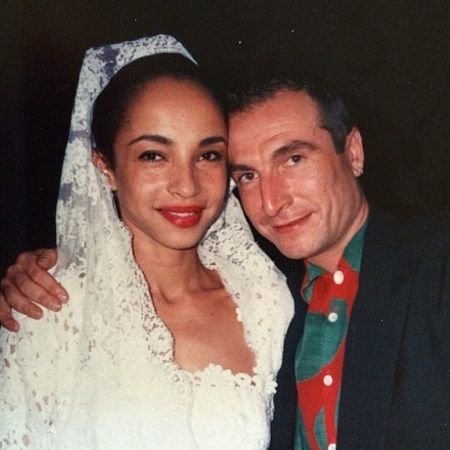
He is the only man Sade Adu has ever married — a Spanish filmmaker who spent his working life behind the camera, then married one of the most recognizable voices on the planet and slipped back out of public view almost completely. Carlos Scola Pliego’s name runs through film credits stretching from a Sean Connery James Bond picture to African documentaries almost nobody has seen.
And yet for all the searching his name inspires, most of what the internet “knows” about him is invented: phantom modeling careers, phantom birthplaces, phantom children. The real story is better — a working film professional whose path crossed Sade’s during her most fragile years, in a city where both of them were trying, for a while, to disappear.
But there is much more to the story. This is the fullest honest account of Carlos Scola Pliego — his documented film career, the Madrid years with Sade, the 1989 marriage, why it ended, and what the record can and cannot tell you.
| Detail | Information |
|---|---|
| Full Name | Carlos Scola Pliego (often credited as Carlos Scola) |
| Known For | Spanish filmmaker; Sade Adu’s only husband |
| Birth Year | Not publicly known |
| Age | Not publicly known |
| Birthplace | Spain (exact place not publicly known) |
| Nationality | Spanish |
| Profession | Film professional: script supervisor, assistant director, director, writer, producer, dialogue coach |
| Parents | Not publicly known |
| Spouse | Sade Adu (married 1989; divorced 1995) |
| Children | None |
| Current Status | Living privately; last credited film work in 2007 |
Who Is Carlos Scola Pliego?
Carlos Scola Pliego is a Spanish film professional whose career ran through nearly every behind-the-camera discipline: continuity and script supervision, assistant directing, directing, writing, producing, and dialogue coaching. Film records commonly shorten his name to Carlos Scola, while at least one major production — the 1985 miniseries Christopher Columbus — credits him under his full name, directly linking the two.
Sade’s official biography identifies him as a Spanish film director and confirms their 1989 marriage. That marriage is why most people search his name today. But the filmography shows a man who had already spent a decade working in Spanish and international production long before he met her — “Spanish filmmaker and documentary director” describes the verified record far more precisely than “celebrity” or simply “Sade’s ex-husband.”
From Script Notes to the Assistant Director’s Chair
Scola’s documented career begins in the unglamorous engine room of filmmaking. In 1979 and 1980 he is credited with continuity and script supervision on the Spanish features La boda del señor cura and Ópera prima — the demanding job of tracking dialogue, props, costumes, and movement so that scenes shot out of order cut together seamlessly.
By 1981 he had moved into assistant directing, credited as second assistant director on Dos y dos, cinco (1981) and Black Commando (1982). The early 1980s then brought a run of genre and international productions: assistant-director department roles on Hundra, G’olé!, and Scarab in 1983. The progression is that of a working professional climbing the production ladder — not a sudden appearance after meeting a famous singer.
A Bond Film and a Pink Panther
The most eye-catching entries in Scola’s filmography come with an important qualifier. Databases associate him with second assistant director work on the Spain-unit shoots of two major 1983 Hollywood productions: the James Bond film Never Say Never Again, starring Sean Connery and Kim Basinger, and Blake Edwards’ Curse of the Pink Panther. Both entries carry an uncredited designation.
That distinction matters. An uncredited crew assignment may reflect genuine production work, but the name did not appear in the released on-screen credits — so a careful account keeps the qualifier attached rather than inflating it into a headline directing credit. In 1985, better-documented work followed: assistant director in Spain on John Malkovich’s early vehicle Eleni and on the international television miniseries Christopher Columbus, starring Gabriel Byrne.
The Documentary Turn
In the late 1980s, Scola moved from production support into authorship. In 1988 he co-directed, wrote, and produced Ngira: Gorilas en la montaña, a 25-minute Spanish documentary about mountain gorillas filmed in the Democratic Republic of the Congo. The following year he directed and wrote Donde termina el corazón, a feature-length journey of roughly 95 minutes ranging from the Ituri Forest to the suburbs of Nairobi.
Both films came out of Creativos Asociados de Radio y Televisión (CARTEL), both focused on Africa, and both are historically traceable without being widely famous — the available evidence does not support describing them as box-office successes or award winners. What they do establish is a genuine creative turn: the moment a career production hand became a director with his own subjects.
The Madrid Years: How He Met Sade
The clearest account of how their paths crossed comes from El País reporting on Sade’s Madrid years: three music videos connected to her 1985 album Promise had Scola working as an assistant director. Their connection was forged in audiovisual production, not through some unexplained celebrity introduction.
The timing was fateful. Sade was already internationally successful, but grueling touring, the death of her father Bisi Adu, and relentless media attention had left her exhausted. She sought a quieter period in Madrid — and reconnected there with Scola, who was developing his own audiovisual career. She was reportedly present during the making of her 1988 album Stronger Than Pride, with Scola accompanying her during recording sessions in France. Some observers have even suggested he was the source of some of the melancholy on her early-’90s records, though that remains interpretation, not documented fact.
The 1989 Marriage
Sade’s official website confirms she married Spanish film director Carlos Scola Pliego in 1989. Period descriptions refer to a wedding in a Spanish castle, though no clearly identified venue appears in the strongest sources — the setting is best described as reported rather than definitively named.
One honest complication: reputable sources disagree on the exact date. IMDb lists February 11, 1989; El País describes an October 1989 wedding; Sade’s official biography confirms only the year. When sources conflict like this, the defensible answer is the one all three support — 1989 — rather than whichever precise date gets repeated most often. The couple lived together in Madrid.
Why the Marriage Ended
The marriage is widely reported to have ended in 1995, with most accounts agreeing the couple separated roughly a year after the wedding — though sources do not consistently distinguish the separation date from the finalized divorce. Neither party has ever publicly disclosed the reasons.
Sade, famously guarded, offered one rare window into the aftermath. In a seldom-granted interview she described the split in stark terms: “It was a very sad situation. I had to leave… very quickly… with a very small bag. It took five years for it not to be something that affected the way I felt.” She moved back to London; later relationships — with Jamaican producer Bob Morgan, with whom she had her son, and since 2007 with former Royal Marine Ian Watts — belonged to a different chapter. Scola has never given a single major interview about the marriage.
What the Record Does NOT Say
This is where an honest biography earns its keep, because the most-read pages about Carlos Scola Pliego are full of fabrications. Some sites claim he was a model who posed for Vogue and Elle and photographed Penélope Cruz and Javier Bardem. Others place his birth in Mexico in the late 1960s. One widely copied profile even lists Sade’s son Izaak as his child.
None of this is supported by film databases, contemporaneous press, or Sade’s official biography. Izaak Theo Adu — born Mickailia Ila Adu on July 21, 1996 — is Sade’s child with Bob Morgan, from a later relationship that did not involve marriage. Scola and Sade had no children together. His birth year, birthplace beyond “Spain,” education, and family background have never been reliably published. An unknown fact is not a license to invent one.
Life Away from the Spotlight
Contrary to the oft-repeated claim that Scola vanished from the industry after the divorce, later credits exist. IMDb associates him with production on the 2001 television project Capitães da Areia, and lists him as a dialogue coach on the 2007 sports drama Goal II: Living the Dream — a specialist role suggesting continued, quiet participation in filmmaking rather than a return to directing.
No strong recent source establishes whether he continued working after 2007 or formally retired. There are no verified social media accounts, no public appearances on record, no interviews. He appears to have done what both he and Sade always preferred: the work, without the noise.
Bottom Line
Carlos Scola Pliego’s life resists the shape celebrity biographies want to give it. He was not a star who fell; he was a craftsman who worked — on Spanish sets, on a Bond unit, in the Congo with a camera — and who, for six years, was married to one of the defining voices of his era. The marriage made him searchable. The work is what made him real. Everything else the internet tells you about him should be read with the skepticism it has earned.
Who is Carlos Scola Pliego?
A Spanish film professional — script supervisor, assistant director, documentary director, writer, producer, and dialogue coach — best known as the only man singer Sade Adu has ever married.
When did Carlos Scola Pliego marry Sade?
In 1989. Sources disagree on the exact date — IMDb lists February 11 while El País describes an October wedding — but Sade’s official biography confirms the year.
Why did Carlos Scola Pliego and Sade divorce?
The reasons have never been made public. The couple reportedly separated about a year after the wedding, and the divorce was finalized in 1995. Sade later called it “a very sad situation” that affected her for five years.
Did Carlos Scola Pliego and Sade have children?
No. The couple had no children together. Sade’s son, Izaak Theo Adu, is from her later relationship with Jamaican producer Bob Morgan.
What movies did Carlos Scola Pliego work on?
His documented credits include assistant-director work on Never Say Never Again (1983, Spain unit, uncredited), Curse of the Pink Panther (1983, uncredited), Eleni (1985), and the miniseries Christopher Columbus (1985), plus directing the documentaries Ngira: Gorilas en la montaña (1988) and Donde termina el corazón (1989).
Where is Carlos Scola Pliego now?
That has never been made public. His last credited film work was as a dialogue coach on Goal II: Living the Dream in 2007, and he has given no interviews and maintains no verified public presence.
